
Retreat given at Belmont Abbey, Herefordshire – 1. An Introduction to Journeying Deeper
Friday, September 5th, 2025
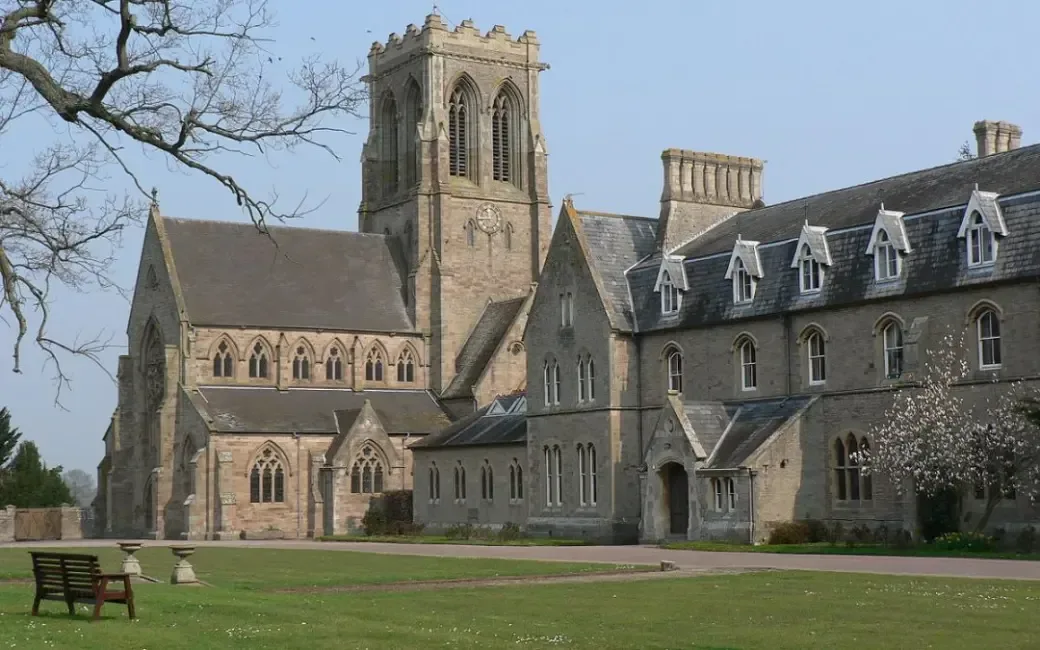
Belmont Abbey | Benedictine Monastery, Hereford UK
This is the first of a series of talks on Mystical Prayer given by David Torkington to members of the laity at Belmont Abbey, Herefordshire, England.
An Introduction to Journeying Deeper.
David introduces the journey. The Gregorian Chant is sung by the monks of Belmont Abbey. “In the Presence of the Angels” sung by the monks of Belmont Abbey.
Transcript of the Recording.
Introduction to Journeying Deeper
I’d like to begin by telling the story of an event that happened about 20 years ago.
I was visiting some friends of mine in London, and while we were talking, they said that their father was over from Sligo, Ireland, and he was working in the garden.
When we went out, I waved to him and said rather fatuously, “What are you doing?” He said, “I do be digging the garden.”
About three weeks later, I was giving a retreat at Killeshandra in Ireland, and I was talking to a sister who taught Irish in Dublin. I told her this story, and asked,
“What did he mean with ‘I do be digging the garden’? She said, “He was using what we call in Irish, the present continuing tense. In other words, ‘I have been digging the garden, I am digging the garden, and when you stop asking fatuous questions, I will continue to dig the garden”.
It struck me at the time that this is a perfect way to translate the Hebrew.
Perhaps my doctor Dr Duffy is right, that the Irish are one of the lost tribes of Israel.
Certainly, they’ve got many idiomatic expressions that are similar, and this is one.
When the scriptures say that God is love, they’re not giving us a Greek, Aristotelian insight into the inner nature of God.
The most accurate translation is not so much that God is love, but God is loving. In other words, God has loved us, he is loving us, and he will continue to love us.
Exactly the same as the present continuing tense in Irish. Now, that is a fact.
Not only is it a fact, but that is precisely the good news that Jesus brought, namely that God is a Father, an ever-loving Father, whose love created the universe in the first place, populated it, and continues to love us, whether we do anything about it or whether we don’t. Secondly, he came to show us by the practical example of his life, how to receive the love that is continually being poured out.
Now, love cannot be forced. Forced love is a contradiction in terms. It’s rather like the old chestnut we used to throw at the teacher who taught us that God is omnipotent.
Well, if he’s omnipotent, can God make a square circle?
The answer, of course, is no. God cannot make a square circle. Why not? Because it is merely a contradiction in terms, that’s all. It’s a non-entity.
It’s a nothing. It’s metaphysically impossible, theologically impossible, logically impossible.
And exactly the same with love. Love cannot be forced. Not even God can force his love upon us.
We must freely choose to receive it. Now, Christ comes, therefore, with the good news that God is love, that God is loving, that his love is endlessly being poured out.
But he then goes on to show us by the practical example of his life, how to turn, expose ourselves in such a way as to receive that love.
Prayer is the word that has been traditionally used to describe the way in which we continually try to turn and open ourselves to receive that love of God that cannot be forced upon us.
Let’s see precisely how Jesus goes about facilitating the possession of the weak human nature that he freely chose in such a way that it became penetrated by the love of the Father.
Now, let’s get this straight before I go any further. From the moment Christ was born, he was divine, but he was born and took upon himself a human nature, and it was with a human nature with which he chose, first of all, to be penetrated by the love of his Father, and overflowing with that love in His death, Resurrection, Pentecost.
That’s what these great mysteries that we’re preparing for now in Lent are explaining to us.
But progressively throughout his life, in the words of. Luke, Jesus grew in wisdom and understanding with the years. He grew intellectually, he grew psychologically in his human nature, so that that human nature then becomes the living instrument that is possessed by the love of God, pressed down and overflowing in his Glorification in the words of St. John.
That is now the Pentecostal mystery, the pouring out. Now, that is continuing now at every single moment, the Holy spirit is being poured out.
That penetrates us all and draws us back into the Risen one.
That’s God’s plan, that under the influence of this love, we become our true selves.
That is the nature of love. It enables a person to become their true self in Christ.
So the big question, therefore, of any authentic spiritual life is, how do we go about facilitating this interpenetration of our whole minds, our hearts, our whole beings, by the very love of God?
Let’s look now and see what Jesus himself did. This is what the imitation of Christ, therefore, means, doing what he did, ourselves, to be penetrated by the same spirit that penetrated his human nature.
Let’s see how he prayed. First of all, number one, he goes to the synagogue. Why does he go there?
He goes to listen to the word of God through the scriptures.
He goes there to pray with his own family, to begin with, and later with the family that he gathers around himself, namely the disciples, the apostles. He goes with them, and he goes regularly.
Secondly, he shares with them sacred meals. All meals for the Jews were very sacred moments, particularly on the Sabbath when the Baraka, that famous prayer of praise, glory, thanksgiving, from which what we call the great Eucharistic prayers, as we know them today, grew from the Baraka prayer, were said together with his family, and later with the family he gathered around him yet again.
Then he went to the temple, first with his parents, then with his new family, where sacrifice was offered with them.
Then there was a time when Jesus went alone onto the mountainside, into solitude, to the garden where it was his custom to pray.
Then, number 5, he prayed regularly every day at the appointed hours, throughout the day.
Remember when he gives the Our Father and he points the finger and criticises the pharisees for the way they make such a show of it in public places, blowing their trumpets before they pray so that everybody can see.
Now, when he criticises them. He’s not criticising them for praying at the appropriate time, for he would have done that with his disciples.
He was criticising them for the way in which they did it. He told them to go and close your door and pray to your Father in private.
And your Father seeing you in private will reward you. Now, that’s how Jesus himself prayed.
Now then, what I want to show you is what happens immediately after the Resurrection, after the Ascension.
The Apostles, the disciples, still go to the Synagogue as they did with Jesus. They continue to go there.
They still go have their sacred meals together, most particularly in celebration of that most sacred meal of all of the last supper, what came to be called the breaking of the bread, when they did as Christ told them to do in memory of him, taking the bread and the wine, saying the words of the Consecration.
Then, of course, they went to the temple. Until that is, they were thrown out as heretics.
The Jews didn’t want them in the synagogue, in their temple. So what did they do?
They came together and they had their own synagogue service.
The Jews used to meet on Tuesdays and Thursdays, so in counter distinction, and to show they were different, they had it on Wednesdays and Fridays, the beginning of what we call the End of the days. They’d meet then.
And what would they do? They’d celebrate what was called the synapsis or the meeting, which was based totally on the synagogue service to begin with. In other words, there would be readings, first of all from the law in the Old Testament.
Then there would be a reading from the prophets and then from the writings.
Then there would be a prayer. Then gradually, what Jesus said and did came to written down. Some scholars believe actually the Gospels have their infancy here in these meetings that people would write down what Jesus said and did, showing how he fulfilled what was told by the prophets.
So little writings about what Jesus said and did would be added to this synapsis on Wednesdays and on Fridays.
On the first day of the week, which came to be called the Day of the Sun, because the sun became a dramatic sign or symbol of the Resurrection they celebrated the Supper of the Lord, fulfilling the command of Jesus at the last Supper.
Then it was believed because of persecution and the danger and the difficulty, therefore, of meeting often, they would only meet once in the week.
Of course, the day to meet would be the first day of the week, the day of the Sun, the day of the Resurrection.
When they came together then, they would have the synapsis first or the meeting based on the Synagogue service, and then it would be immediately followed by the Supper of the Lord. Now, when later the creed was formulated and added with that great hymn, the Gloria, you’re beginning to see the shape of the liturgy, as it came to be called in the early days, the shape of the liturgy as we know it today.
Now, they couldn’t build a new temple.
They didn’t need a new temple because Jesus had taught them that he Himself was the new temple.
He was the new temple. He was the new priesthood. Now they saw, whereas before when they went with Jesus to the temple, they would offer, if it be turtle, doves, or whether it be a lamb or a goat or whatever, now they had to offer not some animal, some bird.
The offering now that had to be made was the offering of themselves. Now they came to see, therefore, that they didn’t go to a high priest or a priest in the temple to do it for them because only they could offer themselves.
So they came to be conscious, therefore, of their own priesthood. In the early church, the priesthood is only used in two senses, one of the whole Christian people who offer themselves up through the one true priest, which is Jesus Christ.
So Christ is the priest, but our offering is made in, with, and through him.
So now, when they came on the day of the sun to celebrate their liturgy, when the famous Baraka is read and they join together at the end of it with those great words “in Him, with Him, through Him, as St. Justin tells us, the Amen, nearly took the roof off because they were so conscious of their priesthood.
Now, in addition to all this, they continued to pray at the prescribed times as they had done before.
Except, of course, as Christianity began to spread outside the confines of Palestine,
They found themselves in a secular world where they couldn’t be breaking off with everybody else because not everybody breaking off for prayer at set times.
So gradually, they began to concertina these times of prayer to the morning and evening prayer.
Except for those, of course, who left the world and went into the desert, the beginning of the monastic movement.
There, they continued at the prescribed times, as they still do today, going right back to the Desert Fathers, right back to the ancient practice of the Jews, praying at prescribed and set times of the day.
But for ordinary people working in the world, that was not a possibility. Remember in the year 70, Jerusalem was smashed to the ground. Not a stone upon a stone was standing.
So that world came to an end. In the new world, therefore, people had to learn to pray at the beginning and at the end of each day.
And what would happen in the prayer that took place at the beginning and the end of each day?
They would begin by using the only prayer book, namely the scriptures, as was used on the day of the Lord, on the day of the Sun, the first day of the week.
To begin with, of course, the scriptures weren’t written to begin with, so they’d perhaps have readings from the Old Testament and from the proposals of the disciples who’d known what Jesus had said, but that gradually came to be written down.
Remember, in those very early days of the church, they thought that Christ was coming back very soon indeed.
Therefore they thought, well, why start writing down everything he said and did.
The Parousia, the great appearance was going to happen anytime. It was only after the death of John or even before that, that they began to realise that no,
He wasn’t going to come back as quickly as they’d expected. So people began to write down everything that he said and did.
So the scriptures would become the main prayer book that would be used for morning prayer because they wanted to come to know Christ more deeply by meditating on what he said and did because it is only in coming to know somebody that you come to love them.
The more you love them, the more you want to give yourself to them, the more you want to offer yourself and sacrifice for them because that is the nature of love.
The next element would come into these morning and night prayers, something that was later called the Morning Offering. which seems to have gone out nowadays.
Very rarely one hears people talking about it, but it is extremely ancient. At the beginning of each day, you would offer that whole day as you would offer your whole self, your whole being, at the Eucharistic celebration when you would exercise your priesthood.
Through the morning offering, therefore, you would offer the forthcoming day, and you would offer all that you had done since last you had prayed in, with, and through Christ.
You would exercise your priesthood. When my mother first taught me. She said, This is the way you can become a little priest each day, so that everything you say and you do in that day will become a priestly action.
It is in giving that you receive. It is in loving that you become lovable, in loving that you open yourself to love.
And so now there’d always be time for quiet in these moments of private prayer, to be still and experience the love of God.
Your self-sacrifice and offering would open you to that love. Be still and know that I am your God.
What came later to be called a spiritual communion, in counter-distinction to the physical sacramental communion received on the first day of the week.
You see, you must remember that it was well into the second millennium before Daily Mass, as we know it, began to take place for ordinary people anyway. It was only once a week.
Morning and evening prayer would be a time, therefore, when your priesthood would be exercised to prepare you to make your whole life a Mass and everything in it that you did, the love for your husband, for your children, in and through your work.
Everything could become a means of sacrifice, of offering yourself in with and through Christ to the Father and then being still to savour what was received in the act of giving.
Now, I know how you pray, all of you. Not because I have the gift of reading other people’s hearts.
I have a far more commonplace gift, and that is of reading my own heart when I’m at prayer.
This morning, for instance, when I prayed before setting out I turned to open myself to God in prayer, to be lost in pure, simple contemplation.
Then a few minutes later, I wondered if it’s the same lot that will turn up. There go all my best stories.
They won’t laugh at my jokes. They might demand the money back if it’s the same old stuff. Then I suddenly remember what I should be doing. And so what do I do again?
I turn and open myself to God in prayer, to be lost in pure contemplation.
And I gave Father Brendon the wrong time that I was supposed to arrive at the station.
What am I going to do? Well, I better make sure that I pack the telephone number so if he’s not there, I can ring him up.
And then I’m off again. Oh, and when the weekend’s over, I’ll be able to look forward to my holidays again. And then it’s back to prayer again.
Well, do I understand your prayer? Take heart. Saint Teresa of Avila said, you will always have distractions in your prayer.
Now, if you, therefore, say to me that prayer is a waste of time, because in let us say, quarter of an hour that you’ve set aside for prayer, you’ve had a 101 distractions.
Take heart. What does it mean? If you’re really telling the truth, it means that 101 times you’ve turned back to God.
You’ve said no to self, yes to God. You’ve made an act of self-offering, of sacrifice.
You’re not going to wallow in your own fantasy world, but to say no and turn back to God. In short, you have, and this, those of you who were here last time will remember, you have repented. You’ve repented 100 times.
Now, if you say to me, Oh, well, I only had two distractions. The first, when I started on my holiday, I started to think of the south of France.
Oh, that holiday in Menorca. Shall I go back there? A quarter of an hour later, That’s different. If you only have two distractions, not good, but 102, that’s good.
You’ve endlessly said no to self. You’ve been practising dying to self, to the old man or the old woman in you. You’ve been dying to the old man or the old woman who is within us to turn to the new man, to allow his love to penetrate us.
That is the very nature of prayer. There’d only be two occasions when you don’t have distractions in prayer. And that’s when you fall asleep.
Even Saint Therese of Lisieux said she offered that up. But if you really fall asleep, not really prayer.
Why? Because you’re doing nothing. On the other hand, let us imagine the moment your knees touch the ground, you’re swept up into an ecstasy, totally lost in God. Is that prayer?
Well, Saint Teresa of Avila talks of the prayer of ecstasy, and who am I to say it’s not, but I’m going to do.
Because it’s not really prayer. Why? Because God is doing everything. It’s a pure gift of God. Let’s not belittle God’s gifts by all means.
We need them, but technically it’s not prayer because God’s doing everything. Where is prayer? It’s between the ecstasy and the sleep.
What happens there? We’re continually practising offering ourselves to God, turning away from this distraction, that distraction, practising selflessness, practising, exercising our priesthood.
Now, how does a person become a perfect lover? How do you become a nurse or a doctor? How do you become a driver? How do you become a cook? How do you become a monk? How? By learning, by practising. cmakes perfect, we say. And what is the process of learning?
You perform a series of actions until a habit comes, and from a habit comes an inner disposition of heart.
That is the learning process.
Do we think that the art of art, learning to be selfless, loving people, is an exception to that rule? Because if we think it is, we’ve made a terrible mistake.
We’ve made the biggest mistake we can possibly make in our lives. It has to be practised.
This is why a great mediaeval mystic, St Angela of Foligno, who had been both married and ended up a nun who experienced both religious life and married life, Prayer is the Schola Divini Amoris – The School of Divine Loving.
Prayer is a school where you go to learn selflessness under the influence of the Holy spirit as we practise our priesthood, as we learn to offer ourselves.
This is why the saints, in the end, became very selfless, compassionate people, because they’d learned and they practised in set periods of time, and there isn’t another way.
Believe me, there isn’t another way.
That’s when God’s love can infiltrate ours. I remember years ago when I decided to try my vocation as a Franciscan, and I was in the noviciate, and the novice master said to me,
You’re just the man we’re waiting for. We’ve decided to put you in charge of the washing.
Now, in those days, the washing didn’t mean collecting and sticking it into a washing machine.
It meant, first of all, collecting wood from the forest and then coming inside and shoving it underneath the boiler and then filling the copper with water and then getting the fire going.
About two hours later, you’d then put the stuff in.
Of course, in those days, everything had to be starched as Well, so I found down in the cellar a ringing machine, which I dragged out to help me.
As I was trying to turn this around cursing and swearing, I was only a novice.
I hadn’t got there yet. A brother came by and he said, One moment, frater, because that’s what they called us. and off he went to the woodshed.
He didn’t find anything nasty in the woodshed but a pot of oil. He came back and he said, Now try.
Now, as I tried to turn the handle, he began to pour oil onto the cogs. With my endeavour and the facilitating power of the oil, gradually it began to turn.
Now, that’s why oil is used as a symbol for the Holy spirit. This is what is happening in the sacraments, for instance.
This is precisely what is happening in prayer.
As we are trying to turn, to offer, to act selflessly Again and again and again and again and again, we enable the facilitating power of the Holy spirit to bring the process to perfection, to make us ever more perfect and selfless.
So that what is learned inside of prayer, then we go out and put it into practice in our home with the children, in the hospital, the shopping centre, the love of our husband, the people we employ with our neighbours, by the kind self-sacrificial, compassionate way we deal with them.
But it has to be learned. It is the Schola Divini Amoris – The School of Divine Loving.
That is the nature of it, of prayer. In other words, When we go to prayer, we are going to exercise privately and personally what is exercised communally and sacramentally at Mass on Sunday.
It is the same that is taking place so that the whole of our life can become the Mass, the place where we are either loving God directly in prayer or loving him indirectly through the neighbour in need, fulfilling the great Mandatum of the Lord, to love God with your whole heart and your whole being and your neighbour as yourself.
But this is, first of all, learned, therefore, at set periods of time within prayer, so that in giving, we are receiving.
This is exactly the process that’s happening in the Mass. In other words, this is the only way to what the Gospels call the ‘Prayer Without Ceasing’.
So the end of all prayer is that every moment of our life is a prayer. Every moment of our life is the Mass, the place where we are continually offering.
And in the offering, we are continually receiving as we are being fitted into the perfect priest, which is Jesus Christ, our Lord.
The more perfectly we are being fitted into him by the power of the same love that penetrated him, the more perfect we are giving, the more perfect we are loving, the more perfect we are becoming.
Now, I’m going to end this evening, but that’s the context I want you to have at the back of your mind for everything else that I’m going to be saying about prayer.
So we never lose what I’m dealing with the minutia, we’re never losing sight of the context of prayer.
That in the end, contemplative prayer, the deeper it becomes, fits us more deeply into the Risen one, through whom we offer ourselves continually to the Father, through whom we are possessed, till we overflow.
And that is why the saints were so effective in what they did. It’s what overflows from us that is powerful and effective.
A great Jesuit mystic, Pere Lallemant once said, “You can do more in a month with contemplation than in a lifetime without it.”
That’s why contemplation is so important.
But that is the context, therefore, in which the whole of the weekend is going to take place.