Retreat Belmont Abbey 5, Power in weakness
Saturday, November 29th, 2025
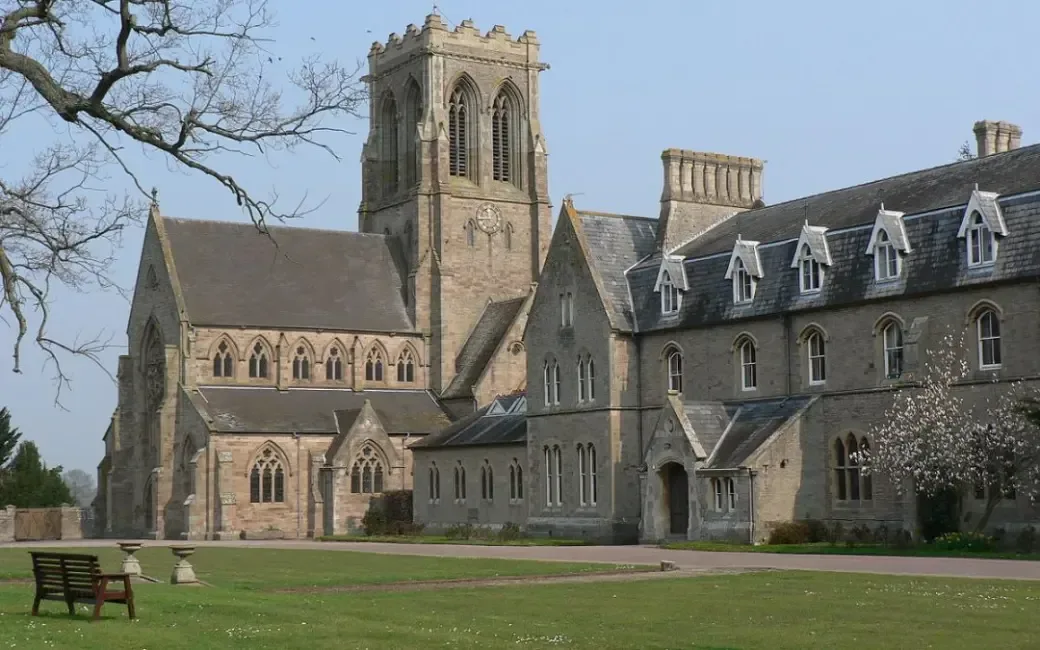
This is the 5th and final of a series of talks on Mystical Prayer given by David Torkington to members of the laity at Belmont Abbey, Herefordshire, England.
David explains the journey in Prayer from the beginnings to Catholic traditional Mystical Contemplation. He describes God’s power working through weakness
The Gregorian Chant is sung by the monks of Belmont Abbey. Christus Vincit from – “In the Presence of the Angels”
Transcript of the Recording.
Power in Weakness
When I came here last time, a man cornered me and said, no offence or anything, I hope you take it the right way, but what qualifications have you to speak on prayer?
Well, I suppose he had a point. If I was giving a scripture course or a course on psychology or theology or whatever, you’d want to know how I was qualified to stand up here and talk to you about it. But I was still rather taken aback, didn’t quite know what to say. The reason being, I haven’t any qualifications at all to talk on prayer
In fact, my qualification is that I haven’t any qualifications. I mentioned to you earlier that I was a strange phenomenon in the late ’40s and early ’50s in a grammar school, not because I passed the 11 plus, but because for some reason and some way, my parents managed to pay for me to go.
They knew I wouldn’t pass the 11 plus, yet they didn’t know why, and I didn’t know why either. Nor did my teachers know why I was the bottom of every single class that I went into.
Dyslexia wasn’t understood in those days at all. I didn’t understand myself either. Then I thought, but perhaps there is just someone else who would understand, because I’d been taught in religious class that God understood and knew everything. Perhaps he would understand me.
Now, I was at a very rare school because every Monday there was a meditation class for those who wished to go. So I thought, better try and get a direct line to God. Perhaps he can help me. And so that’s how prayer became very important to me.
It wasn’t because I was particularly pious, because I was not. It was simply because I had nowhere else to go. How many times do you turn to God when you’ve tried everything else and it doesn’t work? And as an utter last resort, but you know it’s true, we turn to God. Well, that’s what I did.
Many of the other boys dropped out. They had other things to do. They had their degrees to get. They had their ambitions. They had their study. I did not, So I hung on like grim death.
I was going to hang on like grim death. And I did. Once again, not because I was pious, because, in the words of St Peter, Lord, to whom else shall we go? And so when the going got rough and others packed up, and in other circumstances, I would have packed up, I just kept hanging on, sticking in there through thick and thin.
And when strange things began to happen and I didn’t understand what was going on, and the darkness seemed to get darker and darker, I didn’t know where I was going. No one seemed to be able to understand that any more than my dyslexia.
So I started to rummage around in the library. And I believe it must have been the hand of God that directed me to Saint John of the Cross. I found it difficult to read anyway, but I stumbled through and all of a sudden, what he was saying began to make sense to me.
I thought, But this is incredible. How can this man, this Spaniard, a religious living 400 years ago, be able to describe exactly how I feel and exactly what I’m going through at this particular moment?
And so I found help in the library when I couldn’t find it anywhere else. My strength was my weakness. This is the major theme that goes right through the Old Testament into the new, that God’s power works most perfectly in weakness. As I hung on, I found weaknesses that were far worse than mere dyslexia -moral weaknesses.
I could do nothing about them by myself. I couldn’t overcome them. I tried and I failed. I knew there was one person who could, so I hung on.
Reread the Bible. See how the whole story begins with a man who was over 100, an impotent man and a barren woman who were going to give birth to the child who would be the father of a new people.
God’s promise came, first of all, through weakness. An impotent man and a barren woman. He chose them to be the father and the mother of the people of God, God’s people. Would you have chosen them? But God did. He always chooses weakness.
Who, for instance, would have chosen a stutterer to be his spokesperson before Pharaoh? Would you have chosen such a person? God did. He chose Moses the stutterer.
Would you have chosen the stripling David to fell Goliath, the giant? No, but God did. Why? This is a whole theme, so long, so lengthy it would take too long to detail this morning. Why? To show that it is not the power of this man’s oratory or the strength of this man’s arm in battle.
It is God who is doing it. It is God’s power who is working through weakness. Would you have chosen Peter to be the rock? He didn’t begin as a Rock. He began as a wobbly jelly, put his foot in it, and failed. Yes, denounced our Lord three times.
Here was a man who had lived with our Lord for nigh on three years or more, heard him preach, seen him cure people. And yet at the end of it, he denied Christ three times.
But, and here’s a theme I want to develop again later in this talk. Here’s the difference between the saints and ourselves. The very moment he realised he had failed, he was sorry and asked for forgiveness.
He didn’t put it off. He didn’t shove it down here, pretend he didn’t see. This is the difference between the saints and ourselves. It’s not that they were not sinners, and we are. We are all sinners. The difference is that they have the humility to turn back to God the very moment they sin, not endlessly putting off.
There is a perfect economy of effort that comes through genuine humility. This is very important, as we’ll see later in our prayer life, too. Look at Paul, persecuting the Christians, putting them to death. He was the one God chose to be the apostle to the Gentiles.
Now, don’t think that the moment they’re chosen by God, they immediately become saints, because they don’t. I believe in everything from instant coffee to instant resurrection. But instant sanctity, there is no such thing. It is a gradual process.
Peter still puts his foot in and makes mistakes after the Resurrection. Misunderstanding the gospel, he has a row with Paul over it. Paul himself has rows with Barnabas and Mark.
All these people become saints later. They become saints because they keep turning back to God, keep repenting, the very moment they are aware that they have fallen. Paul, ultimately, is the first to write the great secret of the spiritual life. It is this, that God’s power finds full scope in weakness.
It’s not just that God can use weak people, actually. Sometimes he can only work through the weak. This is why, wherever you begin in prayer, you will come like Mary Magdaline to the foot of the cross when you feel you can’t pray at all.
It is the prayer of incompetence when all seems black and dark and you’ve got to go on giving, when you see your faults and failings dragging you back.
And yet you have to remain there, waiting at the foot of the cross. It’s there that you experience your total weakness.
At the beginning of the journey, we may go through wonderful stages of arrogance, thinking we’ve made it, we’ve already scaled the heights of Mount Carmel and to the inner recesses of the interior castle when we are the other side of the drawbridge.
But this is the arrogance of youth that is always knocked out of a person, If you are prepared to go on and on and on, never running away. But that’s where you come to in the end, waiting for God in his time, to give us the love that we come to, not only know in our minds, but to experience.
Let me make no mistake about it, though we may be purified in darkness, we also need light. We need the experience of being loved. Every human being needs the experience of love in which to grow.
It is in the love of God, ultimately, and in the experience of that love, that saints are finally made, given that inner security, that inner maturity that you see in Jesus Christ himself. Jesus Christ continually knew and experienced the love of his Father throughout every moment of his life.
That is why he is the most secure and mature person ever to have walked on the face of this Earth. And He now sends the Holy spirit, the spirit that filled Him, the source of His life and inner security, outward, surging outwards at all times.
So that we in our turn receive it and experience the height and depths, the length and breadth of God’s love that surpasses the understanding.
It i in the experience of this love that we are ultimately transformed. But remember the principle I keep coming back to? Unlike That things cannot be united, so there has to be a process of purification that goes on within us preparing for this moment.
Now, I’d like to distinguish between what pertains to the essence of prayer. And, what are methods and means of prayer. So when you go away today, hopefully, if you have not found the means and methods that I have tried to describe helpful, you’ll be able to distinguish between what is of the essence of prayer and what a mere means.
Saint John of the Cross does it by using the example of Moses travelling through the desert with the people of God. And as they’re going along, they meet the Amalekites. Moses goes up on the hillside to watch the army take place in the plain below him. To begin with, the Amalekites begin to push back the Israelis. Greater numbers, more weapons.
At one point, it is as if they’re going to be surrounded and wiped out. Moses doesn’t know what to do. He’s tried everything. So what does he do? What do we do in our last resort?
He begins to pray. And in his prayer, he opens his arms like this, symbolising the raising of his heart and his mind to God in prayer. And so long as his arms are outstretched, lo and behold, the Israelites get the upper hand, pushing the Amalekites back.
But I don’t know if you’ve ever tried standing with your arms outstretched on top of Snowdon or Ben Nevis or Carrauntoohil. You can’t do it for very long. And when Moses’ arms began to drop, the Amalekites got the upper hand again. And so he keeps raising them.
But each time they fall, the Israelites are the worst for it. So his brothers standing by begin to get the message. And they build supports to hold his arms up so they can’t possibly fall down. And yes, you’ve guessed it, the Israelites win the day.
Now, the point he’s making is this. The essence of prayer is raising our heart and mind to God. That’s the essence. The means of prayer are not as important at all. Whatever helps you to do that is good. So if the suggestions I’ve made for a particular moment of prayer are no help to you, it does not matter.
The essence of prayer is raising your heart and mind to God. You do whatever helps you now. Remember that famous saying of Don John Chapman, Pray as you can, not as you can’t.”
There ae as many different ways of praying as there are different people. So whatever I’ve said, therefore, what helps you to continually raise your heart and mind to God, do it and continue to do it.
Before he was made Cardinal, Abbot Hume, as he was then, went to Rome, as a part of a conference of Benedictines who were studying prayer. He found himself with a group of Abbotts and abbesses, and he didn’t really know how to get the ball rolling.
So he thought he would start with asking the first person to say in just a few simple words, what prayer means to them. And the first said, Well, I think prayer is really about having a conversation with God. Another one said, Yes, but I think the word listening is important. It’s more really about listening than anything else.
A third said, I don’t think you can beat the old Penny catechism. I think it’s the best definition in the catechism. ‘Prayer is Prayer is the raising of the heart and the mind to God’.
When everybody had their say, an abbess from Washington said, “Wait a moment, Cardinal Hume, you’re not getting off the hook so easy. What do you say prayer is?”
Well, being a diplomat; you’ve got to be a diplomat to get to the top of the ecclesiastic tree; he said, “Well, I agree with everybody, because in many ways you’ve all been saying the same thing from different points of view”.
But I would like to add one word to qualify everything that has been said. It is the little word ‘trying’. Prayer is ‘trying’ to have a conversation with God. It is ‘trying’ to raise the heart and mind to God.
Prayer is trying to listen to God. It is all in the trying. Simone Weil said, “A person is no more than the quality of their endeavour”.
So whatever means of prayer you choose, those means will be determined by the quality of your endeavour, the way in which you continually try to raise your heart and mind to God.
I would like to qualify it by another word, and it is the word ‘gently’. The moment we get up tight and angry and start clenching our teeth because we’re not getting there, wherever there is, we are getting annoyed with ourselves because we’re not achieving anything in our prayer.
Do you see? Can you see my face now? Why are we angry? We’re angry because we are not getting there. We’re angry because our endeavour is being unsuccessful and we’re determined to storm the gates of heaven.
This is a heresy called semi-Pelagianism, the belief that we can do it by our own power. There is a semi-Pelagian face. The ascetical face. Oh, Father Joe is very ascetical.
On the other hand, there is the Quietest face, the person who does nothing and leaves it to God. “Barkis is willing. Here I am, Lord”, Like a suet pudding waiting to be soaked in treacle.
Prayer is between the two extremes. We know success comes from God, so we gently try to raise our heart and mind to God.
Prayer is gently trying to raise the heart and mind to God, again and again and again, using whatever means or methods you have found helpful.
Means and methods of prayer change with different circumstances in different ages. My mum used traditional devotions that had been developed and devised, to help to get to the essence of the gospel teaching in a simple way.
We always had a picture at home of the Sacred Heart. I remember one day when I was a little boy saying to my mum, “Who is he”? She described who He was, described what the heart meant, what the flame meant, and so forth.
I remember saying, he is Mr. Loving, because you see, I’d been brought up on ‘Children’s Hour’, and my favourite programme on Children’s Hour was Toy Town, when everybody was called by what they did.
Mr Grouser, always grumbling, so he was called Mr Grouser. Mr Inventor was always making things. And then there was Mr Magician. So when my mum told me what He did, I said, He’s ‘Mr Loving’ and everybody laughed.
But the parish priest didn’t laugh. He said, “He’s right, but who told him? And I just looked down. I didn’t want to tell him that I learned it from ‘Larry the Lamb’ and from ‘Toy Town’.
But When I got older and went away and started to study theology, I became a bit dismissive. I became something of a theological snob, began to look down on the simple devotions that I had been brought up on.
I was studying the New Theology, and then the Vatican Council came along. Now the Paschal Mystery was central. The risen Christ was central.
It took me a long time to realise the whole point of the devotion to the Sacred Heart grew up at a time when Jansenism was rife, and everyone thought God was Mr Policeman.
And so the whole point of the Sacred Heart was to show that God is not Mr policeman, but that God is love, that Christ is not just incarnate love, but Mr Loving, and is loving all the time.
This was the message that my mum tried to teach me. This was central to her spirituality. In other words, who is the Sacred Heart but the risen Christ? Incarnate loving and loving all the time.
T. S. Elliot said, “The end of all our journeying is to end up at the place where we started, and to know that place for the first time”. Well, that had happened to me.
When later in my life, my mum was ill, I came to see her. She was lying in bed clutching her rosary. She said, “I can’t use this now, I can’t pray the rosary as I could anymore. I just like to hold it and say a word or a phrase like, “Your will be done”, or just the simple word ‘Jesus’.
Over the years, she’d used the rosary in such a way that it had helped her to meditate on the central mysteries of the faith, enabled her to come to know and to love the person of Christ, that had led her on in the way I described through her own spiritual adolescence.
She still used and clutched the rosary, but it had led her on into a far more contemplative form of prayer. She said, “Sometimes I just hold it and I remain still before God. I don’t want to say anything anymore”.
One of the most wonderful prayers that has ever been devised is the rosary, because it can be given to somebody right at the very beginning and without them knowing anything about prayer or about the things I’ve been talking about, it can lead them to the heights of contemplative prayer, best of all, without them realising it.
And so also with other devotional practices that have been traditionally handed down. So pray as you can, not as you can’t. Use whatever means help you to keep gently raising your heart and your mind to God.
Now, in case I’ve been weighing you down with complexity throughout this weekend, let me reduce everything to utter simplicity. All that I’ve been trying to say is that the gospel is telling us over and over again that God is Mr. Loving, that God is loving us at every moment.
That is the gospel. That is the good news. The second part is this. As love cannot be forced, we must turn to receive it.
The biblical word for turning to receive is repentance. Prayer is the place where we practise turning to receive it in our own way, using whatever means available to help us to do this.
It’s very simple. First, Seek God and His Kingdom of Love, and everything else will be given to you. Very simple. The spiritual life is not complicated at all. So simple, anybody can understand it.
That does not mean that it is easy. It takes tremendous perseverance. There is only one thing necessary, and that is to keep turning to God in prayer and out of prayer.
In prayer, as we turn to God, we learn, we practise selflessness, we practise loving, we practise all that is necessary to enable us to love God outside of prayer through the neighbour in need.
It’s there that we learn selflessness. It’s there that we learn compassion. As we continually practise turning to God again and again and again and again, we’re doing only one simple thing. It may be just saying a simple word at the end, or a simple phrase to keep us turned and open to God.
Look at the greatest mystic who ever walked on the face of this Earth.
Put a microscope on him at the moment of his prayer. That person is Jesus Christ.
Look at Him at prayer in Gethsemane. See what He’s doing. Listen to what He’s saying. He’s taken with a terrible fear because He knows people are out to nail Him. He knows they’re going to half flog Him alive before nailing Him to the cross.
And so He prays. And this is the prayer that comes from the depth of His humanity. “Father, that this chalice may pass away from me, but not my will, thy will be done”.
That was the prayer my mum told me was her favourite prayer at the end of her life, just repeating, “Your will be done”, and remaining still for as long as she could, in silence, to allow His will.
His will is His love, His love to be done in her. Thy will be done. Prayer is so simple. From one action, performing one action, we can be totally transformed by one simple action.
In the late ’40s and early ’50s, I was mad on sport, most particularly on athletics. The in thing was the new form of training that was coming in from America. called weight training. All they were asked to do was to take up weights and raise them above their heads again and again and again.
With this simple action, it not only developed muscles in their arms, but muscles in their legs, back and their shoulders. By one simple action, they were totally transformed. So that people who hadn’t great natural talent were beating those who had. So in the end, everybody was turning to weight training.
Now, it is exactly the same thing with prayer. From one simple action, namely raising or trying to raise the heart and mind to God, all the spiritual muscles in our personality are being developed simultaneously in that one simple action that we are beginning to tell ourselves is a waste of time and pointless.
Now, particularly in prayer beyond beginnings, when we’re in this strange limbo land, and yet we keep going to prayer, keep trying to raise our heart to God, when God seems to have turned round to speak to somebody of more importance, when we seem to be receiving nothing in return. I’ll tell you, that’s where love is learned.
When we begin to hang on in naked faith, when there is no feeling at all, I tell you, that’s where faith is strengthened. When we are prepared to hope, when everything seems hopeless and continue on and on, then hope is generated.
These are the foundational virtues of the spiritual life. They’re called the theological virtues because they’re directed to God and completed by God.
As we go on and on in this strange darkness, giving and giving without receiving, the theological virtues, the foundations of the spiritual life, faith, hope, and love, are brought to perfection without even realising it.
Simultaneously, at the same time, the moral virtues are all being built up. As our leg muscles are being built up, each time the weight is raised, you’re practising fortitude when you go on giving when you do not receive.
You’re practising temperance when you give up a soap opera or a visit to the pub or the club or a dinner out, in order to give time to God in prayer in this strange spiritual weight lifting.
As you’re practising fortitude, temperance, the Holy Spirit is getting in and bringing our endeavour to perfection. Remember the mangle I told you about earlier. As we’re getting spiritually stronger all the time, the moral virtue of wisdom is developed.
We begin to see more clearly than ever before in this strange darkness. There is light that enlightens the mind, gives wisdom, and what we used to call justice or goodness, and all the derivative virtues of care and compassion and sympathy for others.
How often do we say a person who has never suffered themselves does not appreciate other people’s suffering? It gives compassion as all derivative virtues are developed.
Now, as we journey on in prayer, we’re able to receive the gifts of the Holy Spirit. God only does one thing. In God’s love is every single thing that we need. The analogy I would give is from Newton. It is the analogy of light, which is colourless.
But when light strikes a prism, it is divided into all the colours of the spectrum. It is the same with God’s love. As it strikes our heart, it strikes it as a prism.
Then God’s gifts, the gifts of love, or as we traditionally call them the gifts of the Holy Spirit, are shafted out. Wisdom, understanding, counsel, fortitude, are shafted out to every part of us.
In other words, what I’m talking about is incarnation. I’m telling you how through prayer, the love of God, as it gradually penetrates every part of our being, is bringing about the Incarnation yet again in us.
Remember those words of John Dunne which could also be said as, ‘Twas much that God became like man before, but that man should become like God much, much more.’ And this is God’s plan from the beginning. That the perfect man, Christ, would be the means by which he would make perfect men and women.
So that as we continue to raise our heart, God’s using it, therefore, to build the foundations of the spiritual life, to develop the muscles throughout our spiritual being.
Now, this, of course, can be very difficult and strenuous to begin with. It’s simple to understand, but not easy to practise. We’re always wanting to run away. It’s hard work at times, particularly when those muscles have never been exercised before.
Wherever you begin in prayer, if it’s beginning from the beginning or taking up from where you left off, you are exercising your heart and your mind and your inner spiritual personality. If you’re doing it from the beginning, you’re going to find that prayer can be exacting and tiring.
Back to, therefore, what I said in an earlier talk. The supreme asceticism is the asceticism of the heart. Don’t give up, and here’s the principle I give you.
Don’t give up anything you like or you enjoy, except sin. Except insofar as it prevents you from setting aside daily quality space and time in which to raise your heart and mind to God. Do you see the principle?
If you started rolling up your sleeves and saying, I’m giving up drink, I’m not smoking anymore, I’m giving up watching rubbish on telly, you will fail because you haven’t the strength to do it. We’ve only a minimum amount of strength.
Take what minimum strength we’ve got to do the one thing necessary, to set aside time for prayer. Take this resolution away with you, and from it, everything that you need will come.
Make a resolution that from now on, you are going to set aside some time each day, whether it be 10 minutes, quarter of an hour, depending on how long you’ve been travelling, on the advice of your spiritual director, if you have one, to set aside some time now every day, that you will be faithful to, come hell or high water as people are becoming faithful to gymnasiums at the moment.
This is your spiritual gymnasium, where you go, not to raise weights, but where you go to raise your heart and mind to God in whatever way you can.
Then the God who is loving us always, can begin to work through us, to recreate us in the image and likeness of Jesus Christ, Our Lord, so the incarnation can happen again in us.
Gradually, just as our heart becomes the prism that reflects and refracts the love of God to every part of us, He can eventually use us, in our turn, to become prisms, flesh and blood prisms that God can use so that his love can go outward through us to everyone we meet, work with, come into contact with day after day after day after day.
Every moment and every time is a time for offering ourselves up in prayer to God, and outside of prayer to Him through the neighbour in need.
Every moment, to end at where we started, is a moment for practising and exercising the priesthood that is ours in Jesus Christ Our Lord, extending the Mass that we celebrate commonly throughout every moment of every day.
The key to it all is prayer. This is why Saint Teresa of Avila said, “There is only one way to perfection, one way to Holiness, and that is to pray. If anyone points in a different direction than they are deceiving you. And they are, aren’t they”?
Thanks from Dom Brendan Thomas – Now Abbott of Belmont Abbey
Can I, David, thank you for an excellent weekend. I think what is great, is the richness of this wonderful mystical tradition, the great writings of prayer.
You put it across so beautifully, so simply, that if only we can live it, really. One of my fellow monks, when I mentioned that David was coming the first time, said to me,
“His book on prayer was the best thing he read on prayer in his novitiate that kept him going at prayer”. So I think you are a great and good teacher. Thank you”.